Inspiring Curiosity, Agency, Reflection, & Empathy
Check out the On-Demand Resources Available

What we call our dogs matters more than we think. Here's why shifting from judgment to observation can make all the difference—for your dog, your community, and the families we’re trying to help.
Let’s just say it—most of us have been there. You’re tired. You’re frustrated. You’ve said the same cue seventeen times. And out comes something like:
I’ve said it too. More than once. But here’s something I remind my clients of often (and, let’s be honest, something my therapist gently reminds me of too): The way we talk about a dog shapes how we see them. And how we see them shapes the support they get—or don’t get. So what can we do? Observation vs Judgment
See the difference?
Observations describe what’s actually happening. Judgments assign meaning, story, or intent—often without realizing it. And the tricky part? Judgments don’t leave much room for change. When we say, “He’s dominant,” we stop looking for the reason behind the behavior. When we say, “She’s fine at the vet,” we might miss the signs that she’s actually scared (literally) stiff. When we say, “He’s just a jerk,” we forget to ask what he might be trying to tell us. For Dog Parents: Language Shapes Relationship
When you describe your dog’s behavior to your vet, trainer, neighbor, or your own partner—those words matter.
They shape how others respond to your dog, and how you respond to them too. Think about how different it feels to say: “He barks and backs away when people approach too fast” vs. “He’s weird with people.” That first one opens the door for curiosity, empathy, and support. The second one shuts it down. For Rescues, Shelters & Foster Teams: Labels Travel
In rescue work, the way we describe a dog can directly impact whether they get adopted, what kind of home applies, or how safe they feel while they wait.
When we write notes, internally or externally, using labels like:
Behavior is almost always context-dependent.
That “nippy” dog might not show any of that behavior once they feel safe and understood. That “dominant” dog might just be trying to play with limited social skills. That “dramatic” girl might be flinching because she’s anticipating pain.
Instead of assuming we know what the behavior means, let’s describe what we’re actually seeing.
Instead of: “He’s dominant.” You could say something like: “He puts his paw on the other dog’s back and tries to mount during play.” Instead of: "She’s just being stubborn.” You could say something like: “She laid down and wouldn’t move when I tried to get her to go into the car.” Labels Aren’t the Enemy—They’re Just Incomplete
This isn’t about being perfect or never slipping into emotion. We’re human.
But it is about noticing when a label might be getting in the way of understanding—or standing in for real, helpful info.
Judgments tend to sound final.
Observations leave room for the dog to grow, change, and be seen for who they really are. A Quick Reframe Practice
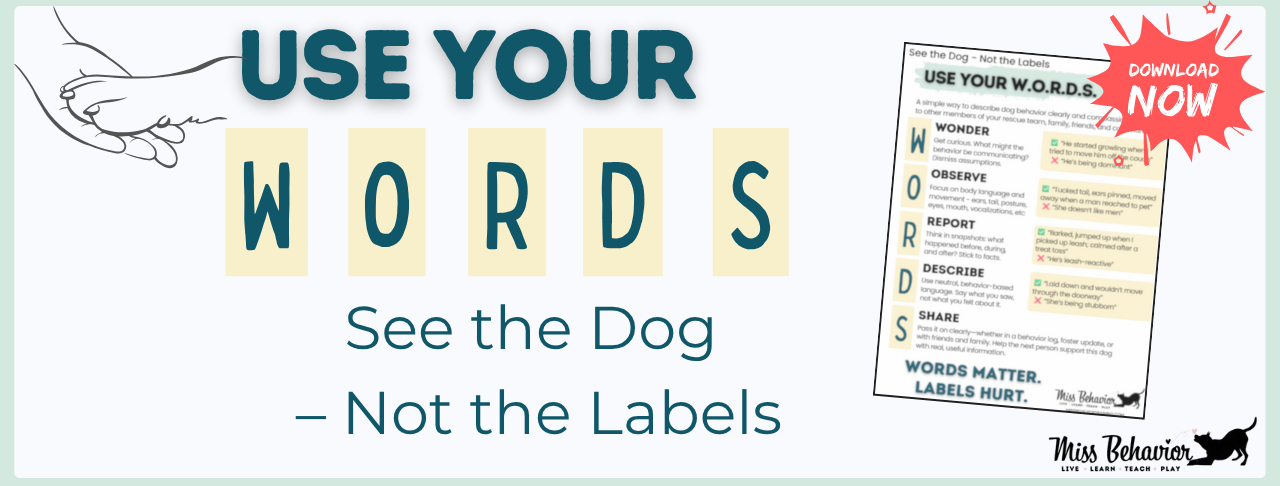
Use your W.O.R.D.S.
W - Wonder: Get curious. What might the behavior be communicating? Dismiss assumptions. O - Observe: Focus on body language and movement - ears, tail, posture, eyes, mouth, vocalizations, etc R - Report: Think in snapshots: what happened before, during, and after? Stick to facts. D - Describe: Use neutral, behavior-based language. Say what you saw, not what you felt about it. S - Share: Pass it on clearly—whether in a behavior log, foster update, or with friends and family. Help the next person support this dog with real, useful information. If you catch yourself using a label (and again—no shame if you do!), try asking:
For example: ✅ “Tucked tail, ears pinned, moved away when a man reached to pet” ❌ “She doesn’t like men” ✅ “Laid down and wouldn’t move through the doorway” ❌ “She’s being stubborn” Grab The Free Download
Are you part of a rescue team who could use this reminder? Grab the free download below and feel free to share with the team (Pet parents - you can grab it too if you like printables!)
1 Comment
|
|

 RSS Feed