Miss Behavior - Coaching for Families and Dogs
  • Home
  • About
    • Meet Laura
    • Family Dog Mediation
    • Media
    • Miss Behavior Recommends
  • Services
    • Private Coaching
    • Virtual Membership
  • Blog
  • Resources
  • Member Login
  • Contact
  • Home
  • About
    • Meet Laura
    • Family Dog Mediation
    • Media
    • Miss Behavior Recommends
  • Services
    • Private Coaching
    • Virtual Membership
  • Blog
  • Resources
  • Member Login
  • Contact
Search by typing & pressing enter

YOUR CART

Picture
Inspiring Curiosity, Agency, Reflection, & Empathy

Check out the On-Demand Resources Available

Picture

9/23/2025 0 Comments

Total Welfare: Helping our dogs THRIVE, not just SURVIVE

We love our dogs like family. They get comfy beds, good food, vet care, and so much love. But if that’s all it took for them to thrive, we wouldn’t see so many families struggling with behavior issues.
​

The truth is, a lot of the barking, lunging, chewing, and “stubbornness” we see isn’t about “bad dogs” or “bad owners.” It’s about welfare—our dogs’ overall quality of life. And when we look at welfare in the whole-dog sense, everything starts to click.

Looking Beyond Training

Most of us are taught that training solves behavior. Sit, stay, come, problem solved… right? Except it’s not that simple.

Training is useful, but it doesn’t explain why your dog is struggling in the first place. Total welfare means stepping back and asking:
  • What kind of life and learning experiences shaped this dog?
  • Does their environment support who they are and the needs they have?
  • What genetic instincts did they inherit from their breed or mix and how is that influencing their behavior?
  • How are their body, health, and individual traits affecting their behavior?

These four questions line up with what we call L.E.G.S.®—Learning, Environment, Genetics, and Self. Every dog’s behavior is a complicated recipe made up of those four pieces.

Behavior Problems = Welfare Problems

Sometimes it helps to hear it right from Kim herself. I love how she explains this part—our dogs’ struggles aren’t “bad behavior,” they’re welfare needs. Take a listen:
Kim puts it so clearly: our dogs’ lives have changed drastically in the last few decades. They’re more captive than ever, and that mismatch between their instincts and their environments often shows up as behavior problems. These struggles are really symptoms of unmet needs.

And that’s the heart of Total Welfare—looking beyond surface-level behavior and focusing on whether a dog’s deeper needs are being met.

From “Freedom From” to “Freedom To”

For years, the gold standard in animal care was the Five Freedoms: freedom from hunger, thirst, discomfort, pain, and distress. This model was groundbreaking in stopping cruelty—but it focused mostly on keeping bad things out.
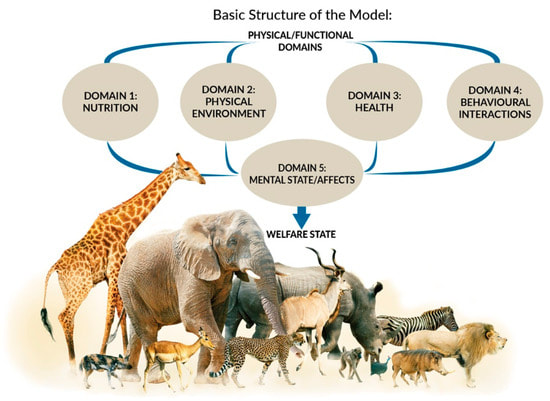
Welfare science has moved forward. The Five Domains Model (Mellor, 2017) gives us a more complete way to understand how animals actually feel day to day. Instead of only looking at survival, it looks at quality of life—whether our dogs get to experience joy, curiosity, comfort, and connection.
The model breaks down into five areas:
  1. Nutrition – Is food not just adequate but enjoyable?
  2. Environment – Is the space safe, stimulating, and comfortable?
  3. Health – Is the dog not only free from illness, but supported to feel good and energetic?
  4. Behavior – Does the dog get to express natural instincts—sniffing, digging, chewing, playing, bonding?
  5. Mental State – When you add all of that up, what’s the dog’s emotional world like—calm and content, or anxious and frustrated?
Picture
Five Domains Model
Source: https://www.mdpi.com/2076-2615/11/12/3504
Why this matters:
Here’s the key insight from the study:

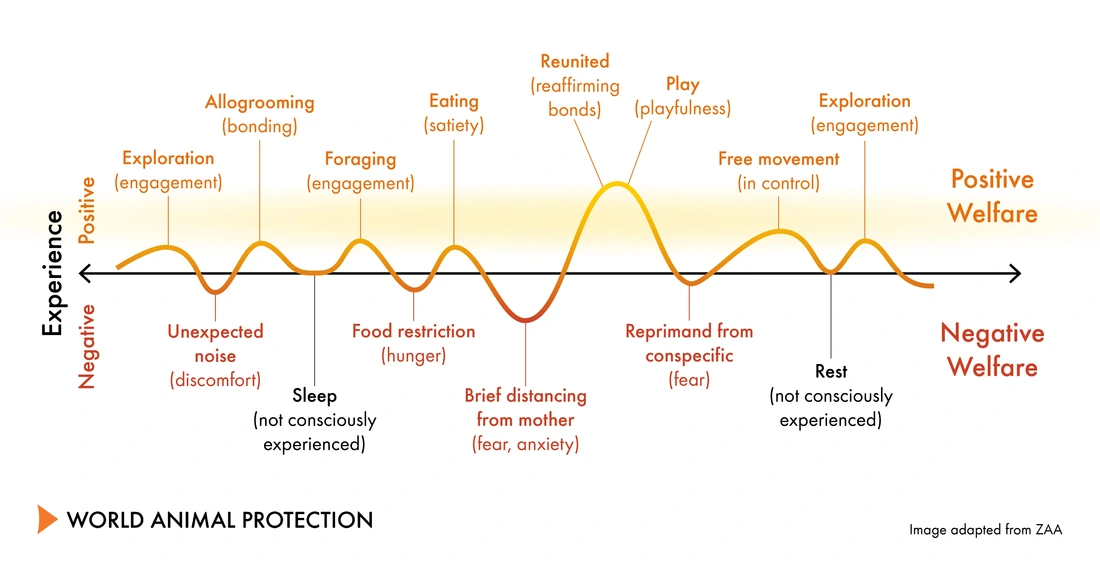
​Dogs need some negative feelings (like thirst or hunger) to stay alive—they motivate survival behaviors.

When those negatives are too intense or constant, they shut down the dog’s ability to enjoy positive experiences. For example, a dog in constant pain won’t feel much like playing or learning.
​

When we support health, safety, and enrichment, we open the door for positive experiences like joy, confidence, and social bonding.

So, the Five Domains model isn’t just about removing suffering—it’s about actively creating the conditions for positive welfare.

​
Picture

Putting It Into Practice at Home 

You don’t need to be a scientist to use this model with your dog. It’s really about asking:

  • Am I giving my dog just enough to survive, or am I giving them chances to thrive?
  • Are their needs for safety, comfort, and expression being met across all five domains?
  • Is their daily life made up of only neutral/negative states… or does it include joy, play, exploration, and rest too?
When we use this lens, “behavior problems” start to look less like disobedience and more like messages about unmet needs.
Picture
When we shift from “fixing bad behavior” to “supporting welfare,” everything changes.

​We stop blaming ourselves.
We see our dogs as whole beings with needs, instincts, and feelings.
Life together gets easier, calmer, and more connected.


Total Welfare isn’t about being a perfect pet parent.
​It’s about helping our dogs live good, full lives -
​lives where they feel safe, understood, and free to be themselves.
​

Dive Deeper

Dog Pros: If you’re curious to dig into the science and application of the Total Welfare model, head over to the Total Welfare Model over in the Family Dog Mediation Education Center Kim Brophey teaches the L.E.G.S.® and Total Welfare framework in depth.

For Dog Parents: If you’re ready to help your pup find their own Total Welfare balance, I’d love to support you. You can join me in the Pup Parent Support Club 💕 or start with private coaching to create a plan that feels doable and kind for both you and your dog.
0 Comments

Your comment will be posted after it is approved.


Leave a Reply.

    Miss Behavior

    Certified Professional Dog Trainer, CPDT-KA
    Based out of Northwood, NH
    Positive, practical, playful methods

    Picture

    Archives

    September 2025
    July 2025
    May 2025
    January 2025
    November 2024
    October 2024
    September 2024
    August 2024
    June 2024
    May 2024
    April 2024
    March 2024
    February 2024
    December 2023
    November 2023
    October 2023
    July 2023
    May 2023
    January 2023
    November 2022
    June 2022
    March 2022
    November 2021
    October 2021
    August 2021
    July 2021
    May 2021
    April 2021
    March 2021
    February 2021
    December 2020
    November 2020
    October 2020
    September 2020
    July 2020
    June 2020
    May 2020
    April 2020
    March 2020
    January 2020
    September 2019
    August 2019
    July 2019
    June 2019
    May 2019
    April 2019
    November 2016
    August 2016
    April 2016

    Categories

    All About Activity Advice Anxious Attention Attention Seeking Attention-seeking Behavior Body Language Breed Collaboration Come Competition Cooperative Care Covid 19 Covid-19 Dock Dogs Dog Dog-dog Reactivity Dog Fighting Dogs Dog Training Dominance Drop It Enrichment Exercise Family Dog Familydog Family Dog Mediation Fdm Foundation Framework Fun Games Genes Genetics Goals Guarding Gun Dog Handling Help History Holiday House Training How To Jumping Kids Kids And Dogs Labrador Leash Loose Leash Love Management Manners Mindset Miss Behavior Muzzle New Dog Pandemic Patterns Permission Pet Care Pet Pro Play Podcast Positive Possessive Potty Training Problems Puppy Questions Reactive Reactive Dog Reactivedog Recall Red Flag Rescue Resourceguarding Shy Skills Socialization Sporting Dog Support Teach Teenager Thief Trainer Training Traininggoal Tricks Trust Understanding Vet Vet Care Walking Worried

    RSS Feed

Home      About          Blog       Testimonials    Media   Contact    
Copyright 2026 - Miss Behavior Training - All rights reserved
Picture
Picture
Picture
Picture
Picture