
Inspiring Curiosity, Agency, Reflection, & Empathy
Check out the On-Demand Resources Available

|
3/26/2026 0 Comments Modern Day DogsWe’ve gotten better at loving dogs, but not always better at building lives that actually fit them.  A lot of people look at dogs today and think, “They have it so much better now.” They sleep on our beds. They have orthopedic mattresses, enrichment toys, fancy food, birthday pup cups, and more sweater options than many of their people. In a lot of ways, dogs are more loved and included than ever. But that doesn’t automatically mean life feels easier for them. In fact, I’d argue that for many dogs, modern life is actually harder. Not because people care less. Usually the opposite. It’s because the world dogs are living in now is often louder, busier, more restricted, more socially demanding, and less biologically matched to what many of them were built for. Dogs have not changed as fast as the human world has. And a lot of what we call behavior problems today starts to make a whole lot more sense when we zoom out and look at that bigger picture. Dogs are still dogs, even if life looks very different nowYears ago, some of those traits had more natural outlets. Now they often show up in ways people don’t love. One of the biggest mistakes we make is assuming that because dogs live in our homes now, their instincts should somehow just fade into the background. But genetics don’t disappear because a dog moved into a subdivision. A dog may still be deeply wired to notice movement, patrol territory, stay close to their people, bark at changes, chase fast things, use their nose constantly, dig, dissect, guard space, or feel wary of novelty. 
So often the dog is not malfunctioning. The dog is doing a version of exactly what their body and brain were designed to do. The problem is that modern life gives them fewer appropriate places to do it. Modern dogs spend more time inside and under control
The modern world is full of strange sensory input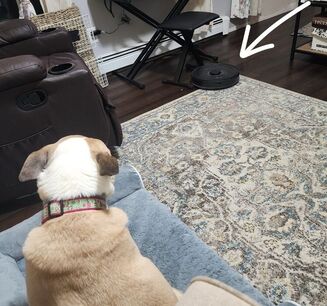 Think about what everyday life sounds and looks like to a dog now. Doorbell cameras. Delivery trucks. Backup beepers. Smart speakers. Phones chiming. TVs with barking dogs and animal noises. Podcast voices floating through the house. Video calls. Robot vacuums. Lawn crews. Fireworks. Construction. Cars. Sirens. Leaf blowers. That is a lot. And much of it is not the kind of input dogs can make good sense of. Some sounds seem important but have no clear source. Some movement appears suddenly and disappears just as fast. Some “voices in the house” are not attached to actual people. Some triggers repeat all day long with no real resolution. A nervous system does better when it can understand what it is noticing and has some way to respond. Modern life often gives dogs a whole lot to notice and not much clarity about what any of it means. Technology changed the rhythm of home life
Social media shares information faster, but also under more pressureThis is a big one. The internet has made it much easier to learn about dog behavior, body language, enrichment, humane handling, medication support, welfare, genetics, and the “why” behind behavior. That part is genuinely helpful.
That affects dogs because it affects the people caring for them. Comparison traps make people second-guess themselves. Too much information makes people feel flooded. Conflicting advice makes people jump from one strategy to the next. Curated content makes real life look like failure when it is actually just real life. A dog does not need a perfect human. But dogs do live inside human households, human schedules, and human nervous systems. When people are overwhelmed, exhausted, anxious, or constantly worried they are doing it wrong, dogs often feel that pressure too. We now choose dogs in very different ways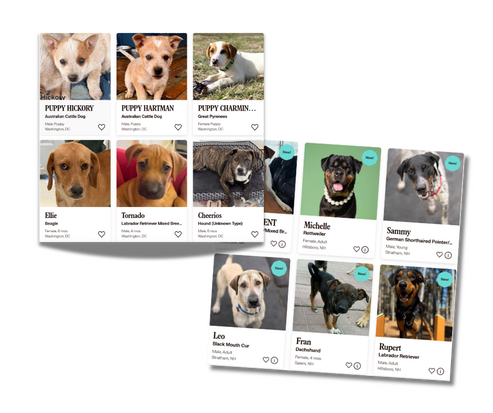 The internet changed how people find dogs as well. Years ago, many people met dogs locally. They might know the breeder, see the litter, visit the shelter, talk to neighbors, or meet the dog more than once before bringing them home. Now people can scroll adoption listings from all over the country and fall in love with a face, a backstory, or a short description before ever meeting the dog. There are real benefits to that. More dogs get seen. More dogs get homes. But it also means people sometimes choose dogs based on emotion first and fit second. They may not know:
Sometimes the dog that arrives is very different from the dog people imagined. That does not mean anyone failed. It means modern adoption often happens faster, from farther away, and with more unknowns than it used to. Early development matters, and so do the decisions we make during itThis is another place where the conversation has gotten more nuanced. We know more now about how early life experiences can affect behavior over time. Prenatal stress, maternal stress, poor recovery, repeated transitions, deprivation, illness, pain, lack of safe socialization, and chronic stress early on can all shape how a dog experiences the world. And then there are the biological decisions we make on top of that. Spaying and neutering early is often discussed like it is simple and neutral from a behavior standpoint. I don’t think it’s that simple. Hormones are part of development. They affect the body, and likely influence behavior and maturation too. That does not mean early altering automatically causes behavior problems. It does mean we should stop pretending it has no effect at all. Then layer in genetics, stress history, transport, environment, and fit, and you can start to see why some dogs are walking into family life already carrying more baggage than expected. Don't forget about epigenetics. Epigenetics is the idea that life experiences can influence how genes get expressed without changing the genes themselves. When a dog comes from instability, poor early care, repeated disruption, or chronic stress, those experiences may not just be “in the past.” They can become part of the dog’s present way of moving through the world. Human mental health is part of the dog’s environmentModern humans are stressed. People are juggling work, kids, finances, screen overload, lack of sleep, constant comparison, political disruption, bad news, social disconnection, and the general feeling that everyone is supposed to be managing all of this with a smile. Dogs are living in that environment too. They are living with humans who are often doing their best while also being stretched thin. We are asking dogs to be more flexible than everToday many dogs are expected to:
And when a dog struggles with those expectations, people often assume the issue is training. Sometimes it is not. Sometimes it is mismatch. Mismatch between the dog’s genetics and the home. Mismatch between the dog’s sensory needs and the neighborhood. Mismatch between the dog’s early history and the pace of family life. Mismatch between what the dog can handle and what modern culture says they should be able to handle. So what do we do with all of this?I don’t think the takeaway is that dogs are worse off now or that families are doing everything wrong. I think the takeaway is that we need more compassion and a wider lens. We need to stop looking at dogs in isolation and start looking at the whole picture. That means asking:
They are signs of a dog trying to function in a world that asks for a lot of self-control, a lot of social tolerance, and a lot of adaptation while giving them fewer natural outlets, less clarity, and not nearly enough say. That’s hard. And I think dogs deserve for us to say that out loud.  We’ve gotten better at loving dogs.
We’ve gotten better at including them. We’ve gotten better at learning about behavior. We’ve gotten better at seeing them as family. But we have not always gotten better at building lives that actually fit them. The modern world offers dogs more comfort in some ways, but also more pressure, more stimulation, more restriction, and more mismatch. So when a dog seems reactive, clingy, restless, noisy, sensitive, or “too much,” I think it’s worth pausing before jumping straight to fixing. Sometimes the more useful question is not, “How do we stop this behavior?” Sometimes the better question is, “What is it like to be this dog, living this life?” That question tends to open much better doors.
0 Comments
Your comment will be posted after it is approved.
Leave a Reply. |
|


 RSS Feed